Download The 2025 M&A Report For Free!
Your download is on the way to your email inbox!
Please make sure your email is typed corectly.

All information is protected & secure.
Full service, flex or express? Compare revenue per car, labor, throughput and scalability to see which car wash business model wins, and why it depends on the site.

Full service, flex or express? Compare revenue per car, labor, throughput and scalability to see which car wash business model wins, and why it depends on the site.
The first half of 2024 has brought a major and significant slowdown in carwash M&A, along with a stark decrease in the dispersion of acquiring parties. Transaction count is down ~46% and the number of sites sold and acquired is down nearly 40%, both compared to the first half of 2023. By way of most active acquirers, 2024 posted a large increase in deal concentration. Most notably, during the first half of 2023, the most active acquiror by transaction count was El Car Wash, having been the acquiring group in just 11% of the announced transactions. The first half of 2024 had Whistle Express representing a commanding 43% of deals as the acquiring group. In this industry report, we cover all announced M&A transactions in Q2 and provide a candid overview of market trends.
There is no single car wash model that is always best. Express car washes generally offer the clearest path to high throughput, lower labor costs, recurring memberships, and multi-location scalability, while a full service car wash can generate more revenue per customer by offering labor-intensive interior services. Flex-serve sits between the two, combining express volume with optional interior cleaning and premium services. The strongest model ultimately depends on local demand, utilization, labor availability, pricing power, and how effectively the operator can execute the concept.
One of the most significant changes in the car wash industry over the past decade has been the shift away from traditional full service operations and toward express exterior car washes. The appeal is easy to understand: express car washes can move more vehicles through a tunnel, operate with fewer employees, support unlimited wash plans, and offer a customer experience that is relatively easy to standardize across multiple locations.
Those characteristics have made the express car wash model particularly attractive to operators building regional and national platforms, but they do not automatically make full service economically inferior in every market. Nor should flex-serve be viewed simply as a compromise between two more established models.
Most comparisons focus on metrics such as throughput, average ticket, and labor costs. Those numbers matter, but they do not fully answer the question owners and investors are usually trying to solve: car for car, and then location for location, which car wash model produces the best economics?
The answer depends on the level of analysis. A full service wash may generate substantially more revenue from a single customer, while an express wash may process far more customers during the same hour. A flex operation has the potential to capture both groups, but only if management can successfully balance labor, pricing, queuing, service quality, and customer demand.
Rather than declaring one model the winner based on a single metric, the more useful approach is to separate theoretical unit economics from the realities of operating an actual car wash.
Before comparing the economics, it is important to define the models themselves. The distinctions between full service, flex and express have become increasingly blurred as operators expand their menus and add amenities.
Many traditional full service car washes now sell exterior-only packages, while modern express tunnel washes may offer free vacuums, tire shine, mat cleaners, and other premium services. From the street, a flex site may look nearly identical to an express exterior location.
For this comparison, the most useful dividing line is surprisingly simple: who vacuums the vehicle?
The vacuum itself is not economically important. What matters is that it serves as a practical proxy for labor. If the customer handles the interior cleaning, the operating model requires significantly less employee involvement than one in which staff members vacuum, wipe down, and finish each vehicle.
Car Wash Advisory’s guide to the different types of car washes follows essentially the same distinction. Express customers handle their own interior cleaning, flex customers can choose between self service and employee-provided service, and full service customers rely on employees for the interior component. That difference in labor directly influences cost structure, capacity, management requirements, and scalability.
At a full service car wash, customers who want the interior cleaned rely on employees to perform the work. The location may still sell an exterior-only wash, but offering that package does not necessarily make the operation flex-serve. If there is no self service option and customers must purchase employee-provided interior cleaning, the underlying operating model remains full service.
Vehicles generally move through an automatic tunnel before employees handle vacuuming, windows, interior wiping, finishing, and potentially more extensive detailing services. That labor allows a full service car wash to provide a broader customer experience and command premium pricing, but it also introduces additional cost and creates a capacity constraint beyond the tunnel itself.
A tunnel may be able to wash another vehicle immediately, but the rest of the operation can only process customers as quickly as employees can complete the interior work. For that reason, labor is not merely another expense line in a full service business. It is a major determinant of both capacity and service quality.
A flex car wash gives customers a choice between an express-style experience and employee-provided interior services. Customers can purchase an exterior wash and use self service vacuum stations, or they can pay more for employees to complete interior cleaning and other premium services.
That optionality is what makes the flex model economically interesting. One location can serve a convenience-oriented customer who primarily values speed and a higher-value customer who wants a more comprehensive service.
The same flexibility also makes the operation more difficult to manage. Labor requirements shift with the customer mix, which means a site dominated by exterior customers can behave much like an express car wash until a surge in interior-service purchases suddenly creates pressure downstream from the tunnel.
Successful flex operators therefore have to coordinate pricing, staffing, workflow, service quality, and customer expectations more actively than a pure express operator. The opportunity is greater monetization of customer demand, but the tradeoff is additional complexity.
At a true express car wash, customers do not have the option to pay an employee to vacuum or clean the interior of the vehicle. They may have access to free vacuums, coin-operated equipment, or another self service setup, but the customer performs that work.
Modern express exterior locations rely heavily on automatic systems. Vehicles move through the tunnel on a belt or conveyor while equipment performs most of the cleaning process, allowing the business to operate with relatively low direct labor per vehicle and focus on speed, consistency, memberships, and volume.
Depending on the configuration, an express tunnel may be capable of processing roughly 60 to 120 or more cars per hour, compared with approximately 20 to 100 for flex and 10 to 30 for traditional full service operations. Those figures should not be treated as guarantees for an individual site, but they illustrate why throughput has become so important to the express business model.
Full service, flex, and express are not the only viable car wash business models. The broader market also includes self service car washes, in bay automatic washes, mobile car washes, hand washes, and several variations of tunnel and conveyor car washes.
At a self service car wash, customers wash cars themselves using self serve bays equipped with high-pressure equipment, foam brushes, and chemicals. Because customers provide most of the labor, these businesses have a very different cost structure from a staffed full service location or high-volume express tunnel.
An in bay automatic car wash takes another approach. The vehicle remains stationary while automatic equipment moves around it, allowing the site to operate with relatively little staffing. The tradeoff is capacity, since a single machine can become a significant bottleneck during peak demand. That operating profile helps explain why in bay automatic washes are frequently paired with gas stations and convenience stores rather than developed solely as high-volume standalone car wash businesses.
Other formats can be successful as well. Auto dealerships may use conveyor or automatic systems to clean their own vehicles, while a mobile car wash can avoid much of the fixed-site infrastructure entirely.
Those models belong in a comprehensive car wash business plan, but they are not the primary focus of this comparison. Full service, flex and express tunnel washes compete more directly for similar customers, making their differences in labor, throughput, and service offering particularly useful to compare.
Per-car profitability is one of the most useful ways to compare car wash business models, but it can also create misleading conclusions when viewed without context. Understanding car wash profit margins and cash flow margins requires looking beyond the headline price of a wash and considering the costs required to deliver it.
At a simplified level:
Contribution per car = average ticket - variable wash costs - direct labor attributable to the service
Using that framework, the advantages of each model become clearer. A full service car wash can command premium pricing because the customer is purchasing both an exterior wash and employee-provided interior cleaning. An express wash will generally have a lower ticket, but it also carries significantly less direct labor per vehicle and may be able to process far more cars in the same period.
Flex sits somewhere between the two. Some customers behave exactly like express customers, while others purchase interior services that increase both the ticket and the labor required to complete the transaction.
A premium full service transaction can therefore appear superior when measured one car at a time, while express may produce stronger economics when the analysis shifts to cars per hour. That is why ticket price alone is a poor measure of which car wash model is performing best.
This comparison is directionally useful, but it is not a universal ranking. The problems begin when theoretical unit economics assume that every location is operating at full capacity and that every customer could just as easily choose any of the three models.
Neither assumption reflects how car wash businesses actually operate.
A customer who wants a quick exterior wash on the way to work is not necessarily the same customer who is willing to wait while employees vacuum and clean the interior. Likewise, someone who values interior detailing and premium car wash services may not view an express exterior wash as an equivalent substitute simply because it is faster and less expensive.
That means the three models do not compete equally for every customer. Demographics, commute patterns, weather, vehicle mix, traffic, nearby shopping centers, pricing, and local expectations can all influence which customer base a particular car wash attracts.
This is where local market analysis becomes more important than generic industry averages. A successful car wash business is not created simply by choosing whichever business model appears most profitable in a spreadsheet. The concept has to match the demand surrounding the actual site.
For a new car wash, a feasibility study and detailed business plan should therefore examine more than traffic counts. Operators need to understand what nearby vehicle owners want, how much they are willing to pay, how frequently they are likely to wash, and whether the proposed service offering gives them a compelling reason to choose that location.
Capacity only creates economic value when customers actually use it. An express tunnel may be capable of processing substantially more cars per hour than a full service operation, but unused capacity generates no revenue.
An express tunnel designed to handle 120 cars per hour could produce weaker economics than a lower-capacity full service location if the express site consistently operates well below its potential while the full service wash maintains steady demand and strong premium pricing.
The reverse can also occur. A full service wash may have plenty of demand but be unable to serve additional customers efficiently because its interior cleaning operation has become the bottleneck. In that case, the tunnel has unused capacity even though customers are waiting for service.
Throughput should therefore be considered alongside utilization. High capacity creates the opportunity to generate more revenue, but demand determines whether that opportunity becomes real site-level performance.
The growth of express tunnel washes becomes much easier to understand when the model is viewed through the lens of scalability. Express removes much of the direct labor that historically made car wash businesses difficult to replicate across large numbers of locations.
Customers remain in their vehicles while automatic systems perform the exterior cleaning, and those who want to vacuum use self service equipment afterward. The process is relatively repeatable, measurable, and consistent, which becomes increasingly valuable as an operator adds more locations.
A multi-site car wash company benefits when labor costs, service standards, equipment requirements, memberships, marketing, and site-level KPIs can be managed through a common operating system. Express exterior fits that objective particularly well because the customer experience depends less on having a large team of employees perform manual work on every vehicle.
The model is also well suited to unlimited wash plans. Memberships can transform what was historically a transactional business into one with a meaningful recurring revenue component. A well-structured car wash membership program can increase wash frequency, strengthen customer loyalty, and make revenue more predictable.
Large express-oriented platforms such as Mister Car Wash demonstrate how important subscriptions can become within a scaled car wash business. Memberships are not exclusive to express, and both flex and full service operators can use them successfully, but the incremental economics differ.
When an additional membership visit primarily consumes water, chemicals, electricity, and available equipment capacity, the cost of that visit can remain relatively manageable. When the visit also requires meaningful employee labor, the economics become more complicated. That distinction helps explain why membership-driven express sites have become particularly attractive to operators and buyers focused on scalability.
The decline of traditional full service car washes does not mean the model has stopped working. A well-operated full service wash can provide a premium experience that express exterior is not designed to replicate, and there are customers willing to pay for that difference.
In this case, the customer is purchasing another form of convenience. Rather than minimizing the amount of service they receive in order to save time, they are paying employees to perform work they would otherwise have to complete themselves.
That can support premium pricing and create opportunities for additional revenue through interior detailing, tire shine, finishing, and other detailing services. A strong full service location with the right customer base can therefore generate attractive revenue per vehicle.
The primary challenge is that the service is labor intensive. As volume increases, labor costs increase with it, while training, supervision, scheduling, and employee turnover become increasingly important to customer satisfaction. The manual cleaning process after the tunnel can also become the primary capacity constraint.
Those factors have major implications for expansion. Operating one excellent full service location is different from maintaining the same service quality across 20 or 30 locations. As the company grows, hiring, training, workflow, quality control, and management have to become repeatable systems rather than processes that depend heavily on one strong site manager.
Full service can scale, but it requires the operator to solve more human and operational problems along the way. In a market with strong demand for premium services, disciplined labor management, and customers willing to pay for convenience, that added complexity can still produce very attractive economics.
Flex is arguably the most interesting of the three car wash models because it can theoretically capture some of the strongest characteristics of both express and full service.
Customers who simply want an exterior wash can move through quickly and use self service amenities, while customers who value interior cleaning can purchase a higher-priced service performed by employees. The same location can therefore serve two different customer preferences without requiring every customer to participate in the more labor-intensive side of the business.
That flexibility creates an opportunity to increase revenue, but it also introduces operational complexity. Management has to forecast how many customers will choose each service path, schedule enough employees to handle interior demand, and avoid carrying excessive labor during periods when most customers choose express service.
The interior side of the operation also has to function without degrading the experience of customers who chose the faster option. Pricing, staffing, queuing, workflow, and service quality all become interconnected.
This is why flex can produce excellent theoretical economics without necessarily delivering the best realized economics. The operator has more levers to pull, which creates more opportunities to optimize the car wash business but also more ways for execution to go wrong.
For a sophisticated operator with strong management, disciplined labor controls, appropriate pricing, and a market that supports both customer segments, flex can be extremely compelling. For an operator focused primarily on replicating the same system across a large number of locations, express will generally be easier to standardize.
Defining the three models around who vacuums the vehicle can initially sound overly simplistic, but the logic becomes clearer when viewed through the operating economics.
Employee-provided interior service changes direct labor costs, peak-hour staffing requirements, management responsibilities, service capacity, and the relationship between additional volume and additional expense. It can even influence the economics of unlimited wash plans because every incremental customer visit may carry a meaningful labor component.
This is why physical similarities between car washes can be misleading. Two tunnel locations might use comparable automatic systems, wash packages, pay stations, and equipment while producing very different economics once a vehicle exits the tunnel.
The vacuum itself is not what determines whether a car wash business succeeds. It is simply a useful indicator of who is responsible for the labor, and that distinction affects almost every other element of the operating model.
The economics of one location are only part of the analysis for an investor or consolidator. The next question is whether those economics can be reproduced across multiple locations without adding disproportionate cost or management complexity.
Express has historically held an advantage here because consolidated car wash businesses benefit from standardization. Marketing, finance, memberships, technology, procurement, training, and other functions can be centralized, but those efficiencies are most valuable when individual sites operate in relatively similar ways.
The more heavily a model depends on local labor execution, the harder it becomes to make every location perform consistently. Express reduces some of that variability, which is one reason it has become so prevalent among larger multi-site platforms.
That does not mean every express car wash is automatically an attractive acquisition. As discussed in Car Wash Advisory’s 2025 Car Wash M&A Report, buyers have increasingly focused on unit-level performance and asset quality rather than rewarding growth or location count by themselves.
A weak express site does not become a strong business simply because its operating model is scalable. The reverse is also true: a high-performing full service location with loyal customers, strong cash flow, well-maintained equipment, and attractive real estate does not become a poor asset simply because it requires more employees.
Operating model is only one part of how a car wash is valued. Site-level performance, memberships, real estate, market position, capital requirements, and buyer demand can all affect the ultimate result.
Startup costs are another area where broad comparisons between car wash business models can become misleading. The capital required to open a self service car wash with several bays bears little resemblance to the investment required for a modern express tunnel with extensive site development, conveyor equipment, pay stations, dryers, automatic systems, and vacuum stations.
Real estate creates even more variation. A site positioned near major shopping centers or a high-traffic commercial corridor may have a dramatically different land basis than a secondary location, while an in bay automatic attached to a gas station has a completely different development profile from a standalone express exterior car wash.
For that reason, generic startup-cost ranges rarely provide enough information to make a meaningful decision. It is more useful to evaluate the cost to build a car wash based on the specific format, property, equipment package, and market.
A new car wash business plan should separate real estate, equipment, construction, site work, financing, opening expenses, and working capital rather than treating startup costs as a single figure. Projections should also account for the learning curve and ramp-up period instead of assuming the location will immediately operate at mature volume.
Similar thinking applies when purchasing an existing car wash. The acquisition price is only part of the investment. Deferred maintenance, aging equipment, tunnel improvements, vacuum equipment, and other required reinvestment can materially change the economics after closing.
When the objective is scalability and standardized multi-location operations, express has the strongest structural case. The model combines high throughput potential, relatively low direct labor per vehicle, strong compatibility with unlimited wash plans, and a customer experience that can be replicated across a larger network.
When the objective is maximizing revenue per customer, full service can have the advantage. A full service car wash can command premium pricing by combining exterior washing with interior cleaning and detailing services, and the model can produce excellent economics in markets where customers value those services and labor is managed effectively.
Flex has perhaps the strongest theoretical case for revenue optimization because it can serve both customer groups from one location. Customers who value speed can use the express component, while those who want more service can spend more on employee-provided interior cleaning. The challenge is that capturing both opportunities requires more operational coordination than either model alone.
Ultimately, the best car wash model is the one that matches local demand and that the operator can execute consistently. High capacity has little value if the market cannot support enough volume, while premium pricing does not help if labor shortages prevent the business from delivering consistent service. Flexibility is only an advantage when management can successfully control the complexity it creates.
The ideal car wash is therefore not necessarily the one with the lowest labor costs, highest ticket, or most sophisticated automatic systems. It is the operation that meets customer needs at a price they are willing to pay, produces attractive site-level economics, maintains customer satisfaction, and can continue delivering clean vehicles as volume increases.
For one location, that may be full service. For another, it may be flex. For an operator attempting to build a highly repeatable multi-location platform, the answer will often be express. The winner changes with the site, customer base, local market, management team, and the level at which the economics are being measured.
For owners considering an exit, Car Wash Advisory provides sell-side advisory for car wash owners, including valuation expectations, buyer outreach, offer evaluation, and management of the sale process.
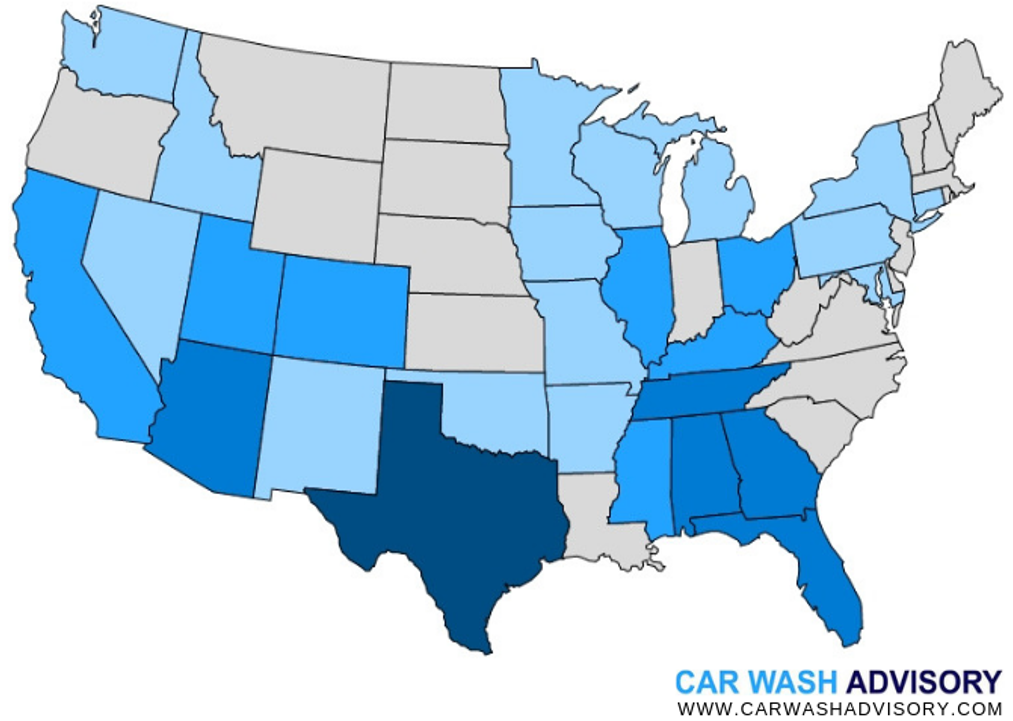



The broader market includes self service car washes, in bay automatic washes, tunnel and conveyor washes, full service operations, flex-serve locations, hand washes, and mobile formats. Among tunnel operators, the most directly comparable car wash business models are full service, flex and express exterior.
An express wash relies on a highly automated tunnel and leaves interior cleaning to the customer, while a full service car wash uses employee labor to provide interior cleaning and related services. Full service therefore has greater revenue potential per customer, while express generally offers lower labor requirements and higher throughput potential.
A flex car wash combines elements of express and full service. Customers can purchase an exterior wash and use self service amenities or pay employees for additional interior services. That gives customers more choice and creates opportunities for higher revenue, but it also requires more active labor and workflow management.
No. A self service car wash is a separate business model in which customers wash their vehicles themselves using self serve bays, foam brushes, and high-pressure equipment. An express exterior location uses an automatic tunnel where equipment cleans the outside of the vehicle as it moves through a conveyor.
An in bay automatic is a car wash where the vehicle remains stationary while the washing equipment moves around it. These washes are commonly associated with gas stations and convenience stores and usually require less staffing than a full service car wash, although a single bay generally provides less peak capacity than a tunnel operation.
Express is generally the easiest model to standardize across multiple locations because of its lower labor requirements, high throughput potential, and compatibility with recurring memberships. That does not guarantee that every express location will be successful, since local demand, equipment reliability, real estate, customer experience, and execution still determine actual site performance.
A car wash business plan should evaluate local market demand, customer mix, pricing, realistic throughput and utilization, labor costs, unlimited wash plans, real estate, startup costs, financing, equipment maintenance, and the management requirements of the proposed model. The right choice depends on how those variables work together at a specific site rather than on any single industry average.
The Definitive Quick Guide: Created and Written by Car Wash Advisory Team
What Your Carwash Margins Should Be and How to Achieve Them
Selling your car wash can be daunting. This piece will explore the three main methods that every car wash owner has at their disposal - Brokers, DIY, and Unsolicited and Direct.